Moose, wolves, black bears and lynx share the woods behind Grand Marais, and sea ducks winter in front of it. Most of these animals are easier to hear about than to see.
Moose
The moose is Minnesota's largest wild animal. An average adult weighs 950 to 1,000 pounds, and some top 1,200. Bulls grow antlers from April and usually shed them in December or January.
How they are doing
The DNR, the Fond du Lac Band of Lake Superior Chippewa and the 1854 Treaty Authority count moose from helicopters every January across about 5,945 square miles of northeastern Minnesota. The 2026 survey estimated 4,470 moose, with a 95 percent confidence range of 3,354 to 6,173. That is 11 percent above 2025, a change the DNR says is within the survey's uncertainty. The estimate was about 8,000 in 2009, fell steeply through 2013, and has hovered around 3,700 since. The DNR says moose remain at risk from climate change, parasites, habitat loss and predation on calves. The Grand Portage Band of Lake Superior Chippewa is a partner in the research on moose survival.
Where and when
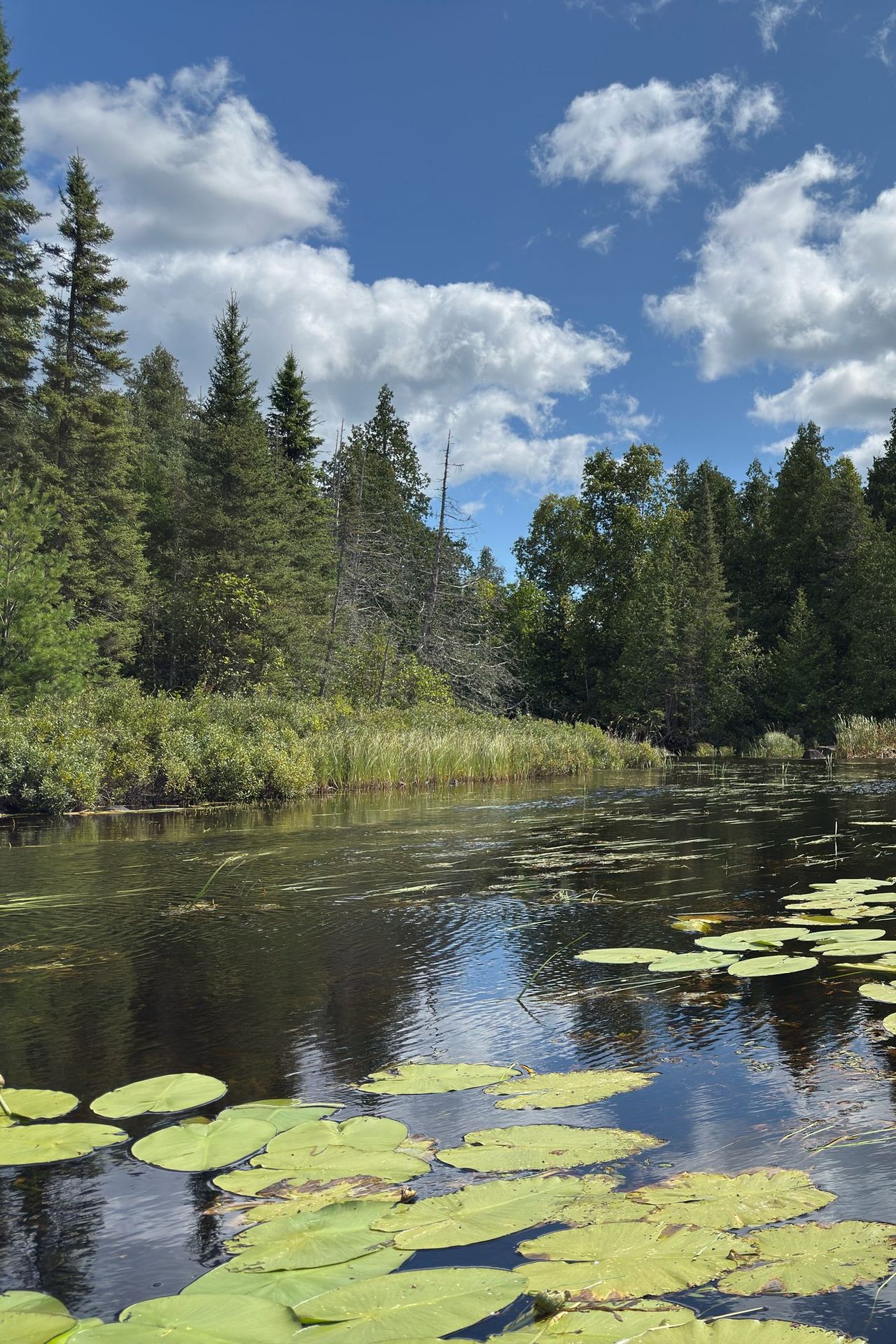
The Forest Service keeps a Moose Viewing Trail about 24 miles up the Gunflint Trail (County Road 12), with parking opposite Forest Road 316 and a short walk to a platform. There is no cell coverage there. Anywhere else, look at dawn and dusk, and watch the low places along the road. In early summer moose feed on water plants in ponds and along lake shores.
Keep your distance
Moose can be defensive, especially cows with calves in spring and bulls in the fall rut. If a moose starts paying attention to you, you are too close. Back away.
On the road
Moose often cross Highway 61 as well as the Gunflint Trail. Slow down in the woods between dusk and dawn and use high beams when you can. The Minnesota Department of Public Safety's deer-crash advice is not to swerve, because swerving sends cars off the road or into oncoming traffic. Deer are most active from 6 to 9 p.m. Call 911 after a crash.
Wolves
Seeing a wolf is luck. The DNR's winter 2024-25 survey estimated about 2,300 wolves in Minnesota in roughly 460 packs, with an average pack of about four. Newer estimates go up on the same page. Wolves in Minnesota have been federally protected as a threatened species since February 10, 2022, and may be killed only in defense of human life.
Black bears
Black bears are the only bears in Minnesota. The DNR estimates 13,000 to 18,000 statewide, and adults run from about 150 to 500 pounds. They are normally shy. Problems start with food: birdseed, dog food, grill grease, garbage, fish remains.
In the Boundary Waters
A Forest Service order in effect April 1 to November 30 each year requires all food, food containers, scented items such as soap and toothpaste, and garbage to be either hung at least 12 feet off the ground and 6 feet out from the trunk, or kept in a bear-resistant container certified by the Interagency Grizzly Bear Committee, unless you are using or watching them. The current order runs from February 1, 2026 to February 1, 2031.
At campgrounds
Never leave food or coolers unattended and never keep food in a tent. Where there is no bear-proof container, store food and garbage in a vehicle or hang it at least 10 feet up.
If you meet one
Follow the DNR's advice. Do not run. Speak calmly and back away the way you came. If it walks toward you, act boldly: shout and throw something. Do not climb a tree, and do not let it get food.
Lynx, deer, beaver and otter
Canada lynx are rare. The lynx is a 20 to 44 pound cat of dense forest, with oversized feet that work like snowshoes and a diet tied to snowshoe hares. Lynx have been protected in Minnesota since 1984 and federally listed as threatened since 2000.
White-tailed deer are in the woods along the shore. The DNR lists them with moose and bears at Judge C.R. Magney State Park.
Beaver are easiest to find by their work: dams and lodges on inland ponds and streams. An average beaver weighs 40 to 50 pounds. River otters are common across northern Minnesota and often play in the Grand Marais harbor.
Loons and other birds
The common loon is the state bird, and Minnesota has roughly 12,000, more than any state but Alaska. Loons nest on inland lakes, not on Lake Superior, but they are common on the big lake during spring and fall migration and again in mid to late summer. Adults leave for the coasts in September.
The shore is a migration route. The DNR's North Shore birds page gives the calendar:
| When | What to look for |
|---|---|
| Spring | First migrants in early April, with the big push in late May. |
| Late August | Common nighthawks, sometimes thousands on a warm evening. |
| September and October | The peak of hawk migration. The lake concentrates hawks, eagles and falcons along the shore, and a day with northwest winds can bring thousands past. |
| Late October into January | Sea ducks from the far north: long-tailed ducks, harlequin ducks and three kinds of scoters. |
| Winter | In some years northern owls and winter finches come down from Canada. The small boreal owl nests in far northeastern Minnesota. |
The harbor is a birding spot too. Scan the big flocks of herring gulls for rarer species. A few bald eagles stay in winter as long as there is open water. From the rocks at Artist's Point, east of the harbor, scan the lake for loons, grebes and diving ducks. Visit Cook County's birding guide has more spots.
Fish, in brief
From shore on Lake Superior, the catch is steelhead, coho salmon, lake trout, pink salmon and coaster brook trout, with the best shore fishing from fall into spring. Many North Shore streams have a waterfall or other barrier that splits them into a lower, lake-run section and an upper section with different fish and different rules. Check the DNR's North Shore fishing page and the Minnesota DNR guide before you fish.
When and where to look
| Animal | Best season | Best kind of place |
|---|---|---|
| Moose | Early summer; dawn and dusk in any season | Ponds and low ground along the Gunflint Trail |
| Wolf | Any season, rarely seen | Inland forest |
| Black bear | April until denning in fall | Forest and clearings; keep your distance |
| Lynx | Any season, rare | Dense forest |
| Beaver | Spring to fall | Inland ponds and streams |
| River otter | All year | The harbor, inland lakes and streams |
| Common loon | Summer inland; spring, late summer and fall on the big lake | Inland lakes; Lake Superior |
| Hawks and eagles | September and October | Overlooks along the shore, on northwest winds |
| Sea ducks and gulls | Late October into January | The harbor and the bays along Highway 61 |
| Warblers | Late May to early September | Woods along the Superior Hiking Trail |
Ticks and biting insects
The main risk from deer ticks (blacklegged ticks) is mid-May through mid-July, when the tiny nymphs feed, with a lower risk in early spring and again in late September and October. Cook County Public Health adds that ticks can be active any time it is above freezing with little snow on the ground. Use repellent, tuck pants into socks, check yourself and your dog after every outing, and remove an attached tick promptly with tweezers.
Black flies breed in running water. They are active spring through summer, bite most in spring, and are worst a few hours after sunrise and before sunset.
Deer flies and horse flies are significant pests in the summer months.
Mosquitoes overlap with all of them. Pack repellent.
Watching without harming
- If an animal starts paying attention to you or changes what it is doing, back off.
- Never feed wildlife, on purpose or by leaving food out.
- Pull fully off the road to watch, and keep your dog leashed.
Injured or orphaned wildlife
The DNR's guidance is "If you care, leave it there." The DNR does not have staff to respond to most reports. Before you touch or move a wild animal, call a permitted rehabilitator. You may not keep a wild animal more than 24 hours or try to rehabilitate it yourself.
| Who | For what | Contact |
|---|---|---|
| Wildwoods, Duluth | Injured or orphaned wildlife; call before bringing anything | 218-491-3604, open 10 a.m. to 4 p.m. daily |
| Minnesota DNR Information Center | General wildlife questions | 888-646-6367 |
| Turn In Poachers (TIP) | Poaching or other wildlife violations | 800-652-9093, or #TIP from a cell phone |
The DNR keeps the full list of permitted rehabilitators.